

Guide About Mousuni Island
Far from the madding crowd, where the River Muriganga whispers to the Bay of Bengal, lies Mousuni Island—a sliver of land in the Sundarbans delta that demands a different kind of travel philosophy. This isn’t a typical holiday; it’s a visit to Mousuni Island that serves as a reset for the soul. It’s an immersion in the elemental, where the rhythms of tide and soil dictate the pace of life. This guide is crafted not just to inform, but to prepare you for the profound simplicity that defines a travel to Mousuni Island.
Table of Contents
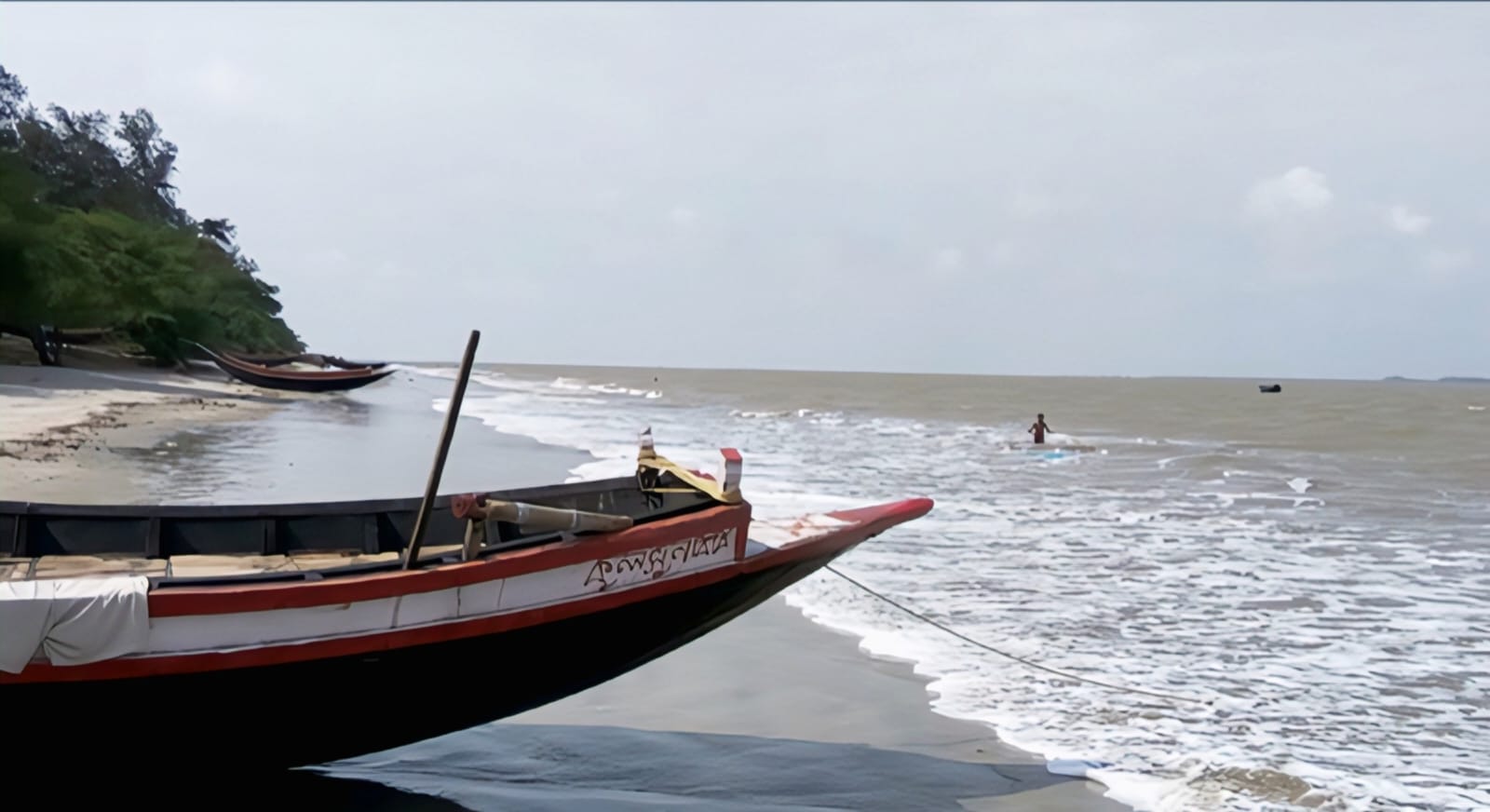
Mousuni Island Unveiled
Mousuni is a dynamic, living landscape in the South 24 Parganas district of West Bengal. It’s a textbook example of a deltaic island, formed by the silt of the mighty Ganges, and is constantly being shaped and reshaped by erosional and depositional forces.
The Two Faces of the Island: Geographically, it’s divided into two distinct parts:
- The Settled Interior: A labyrinth of villages like Baliara, Mathurakhand, and Dhablat, where life revolves around paddy cultivation, betel leaf (paan) plantations, and intricate ‘Bheries’ (brackish water fish farms).
- The Wild Fringe: The southern and western edges, where mangrove forests give way to vast mudflats and long, lonely beaches like Bagdanga and Bakra. This is the zone where the human world meets the raw power of the sea.
A Fragile Ecosystem: Mousuni is on the front lines of climate change, facing significant threats from sea-level rise and coastal erosion. A trip to Mousuni Island is, therefore, also a lesson in ecological vulnerability and the resilience of the communities who call it home.
A Magical Travel Guide to Mousuni Island
Bagdanga Beach
- The Journey: The ride to Bagdanga is a spectacle in itself—trundling past shimmering fish farms and through villages where children wave enthusiastically.
- The Experience: The beach is vast, but the true magic is at the Delta Point. During low tide, the sea recedes up to 2 kilometers, revealing a breathtaking expanse of mirror-like mudflats. Walking on this otherworldly terrain, with your reflections stretching to the horizon, is the quintessential Mousuni experience. The sunset here is a celestial event.
- Pro-Tip: Coordinate with your homestay for low tide timings. Wear sturdy, disposable footwear or go barefoot. The mud is therapeutic!
Bakra Beach
- The Access: Reaching Bakra often involves a short, adventurous boat ride from Bagdanga or a trek through coastal shrubs. This barrier to entry ensures its pristine solitude.
- The Experience: This is where you come for absolute silence, broken only by the call of seabirds and the gentle lapping of waves. It’s a pristine canvas of sand, driftwood, and seashells, ideal for meditation, introspection, and unparalleled bird photography.
The Village Life Immersion Tour
- Paan Baroj (Betel Leaf Gardens): Walk through the shaded, vine-laden structures where betel leaves are cultivated. Understand the meticulous care this cash crop requires.
- The Fishermen’s Cooperative: Visit the early morning fish auction at the local jetty. Watch the vibrant, weather-beaten boats unload their catch and witness the lively bargaining.
- Cycle Through the Countryside: Rent a bicycle from your homestay and explore the narrow embankments (puls) separating paddy fields and fish farms. The golden hour light here is magical.
Sunderbans Camping & Bonfire Nights:
- The Setup: Several operators set up eco-friendly camps with twin-sharing tents, sleeping bags, and basic mattresses on the sandy dunes near Bagdanga.
- The Experience: As dusk falls, a bonfire is lit. Share stories with fellow travelers, enjoy a simple meal of rice, dal, and freshly caught fish, and then lie back to gaze at a starry sky unpolluted by city lights. The profound quiet is an experience.
Best Time to Visit
- Prime Window (October to February): The air is crisp, the skies are a brilliant blue, and the temperature hovers between 12°C and 25°C. This is the perfect time for all activities, especially bird watching as migratory visitors arrive.
- Shoulder Season (March & Early April): The heat and humidity begin to climb. Mornings and evenings are still pleasant, but the midday sun can be harsh. You’ll encounter fewer tourists.
- Strictly Avoid (Mid-April to September):
- Summer (Apr-May): Oppressive heat (32°C-40°C) and high humidity make exploration uncomfortable.
- Monsoon (Jun-Sep): The island is battered by rains, high tides, and cyclonic weather. Most homestays shut down, and travel is dangerous due to flooding and erosion.
How to Reach
The Standard & Recommended Route: Train + Boat + Toto
Kolkata → Namkhana (by Train):
- From Sealdah Station, board a local train on the Sealdah-Namkhana line (e.g., “Namkhana Local”). The 2.5-hour journey through rural Bengal is a cultural experience.
- Train Tip: Opt for a “General” or “Second Class” ticket for the authentic experience or pay a little more for a slightly less crowded “First Class” compartment.
Namkhana → Baliara, Mousuni (by Boat & Toto):
- From Namkhana Station, take a 15-minute Toto ride to the Fraserganj / Mousuni Ghat.
- At the ghat, you will find shared boats (cost-effective) or can hire a private boat (more flexible, costs ₹300-₹500) for the 20–30-minute crossing to Baliara on Mousuni Island.
- From Baliara, your final leg is another Toto ride (30-45 mins) to your specific homestay in Bagdanga or other villages.
Alternative Route By Car
- Drive from Kolkata to Kakdwip (approx. 3-4 hours). From Kakdwip’s Lot 8 ghat, you can find boats to Mousuni. This route is longer but can be more comfortable for those averse to train travel.
Financials: A Detailed Cost Breakdown
| Expense Category | Budget Backpacker (DIY) | Comfort Seeker (Package) | Luxury (Private) |
| Transport (To & Fro Kolkata) | ₹600 (Train & Shared Transport) | Included (non-AC Car) | Included (Private AC Car) |
| Accommodation | ₹1,000 (Basic Homestay) | Included (Eco-Camp/Comfy Stay) | Included (Premium Tent/Cottage) |
| Food (All Meals) | ₹600 (At Homestay) | Included | Included (Gourmet Bengali Meals) |
| Activities & Guide | ₹300 (Shared Boat, No Guide) | Included (Guided Tours) | Included (Private Guide & Boat) |
| Miscellaneous | ₹200 (Water, Snacks) | – | – |
| Total (Approx.) | ₹2,700 | ₹4,000 – ₹6,000 | ₹7,000+ |
Accommodation Spectrum: Where to Rest Your Head
- Rustic Homestays (₹800 – ₹1,500/night): The heart of the Mousuni experience. Families open their homes, offering simple, clean rooms, basic attached bathrooms (often with Indian toilets and bucket baths), and delicious, home-cooked meals. Expect genuine warmth and cultural exchange.
- Eco-Camps (₹1,500 – ₹4,000/night): These offer a more structured “glamping” experience. Tents or huts are equipped with better beds, sometimes Western toilets, and common dining areas. The package almost always includes all meals and guided tours.
- Note: Very few places offer AC due to limited electricity. Power is typically from generators/inverters, available for a few hours in the evening.
FAQ About Mousuni Island
- Is there any risk of encountering Royal Bengal Tigers on Mousuni?
The probability is virtually zero. The core tiger habitat is deep inside the protected Sundarbans Tiger Reserve, far from the inhabited parts of Mousuni. The wildlife here is of a smaller, gentler variety. - What is the exact mobile network situation for different providers?
BSNL has the best coverage, with intermittent 3G/2G. Airtel and Jio have very spotty signals, mostly limited to the village centers. Data connectivity is unreliable and should not be counted upon. - Beyond cash, are UPI payments like PhonePe or GPay accepted?
Due to poor connectivity, UPI payments often fail. While some homestay owners might have a connection strong enough to accept it, you must operate on the assumption that it is a cash-only economy. Carry more than you think you’ll need. - What specific items should be in my first-aid kit?
Beyond basics, include: antiseptic liquid, anti-diarrheal pills, rehydration salts, antihistamines for allergies, a good antiseptic cream for insect bites/cuts, and a course of broad-spectrum antibiotics (consult your doctor). - I have specific dietary needs (Jain, Gluten-Free, Vegan). Can they be accommodated?
Yes, but with prior notice. The local cuisine is fish-and-rice based. If you inform your homestay in advance, they can prepare simple, satisfying meals like dal, rice, potatoes, and local greens tailored to your needs. - Are there any cultural norms or dress codes I should be aware of?
Dress modestly to respect the conservative rural culture. Avoid shorts, tank tops, and bikinis in the villages. While on the beach, you can be more relaxed, but it’s still wise to cover up when leaving the beach area. - Can I rent a bicycle on the island, and what are the conditions?
Yes, some homestays offer bicycle rentals for ₹100-₹200 per day. The cycles are basic but functional. The terrain is flat, making cycling a delightful way to explore, but be prepared for sandy paths. - What is the policy on alcohol consumption?
Alcohol is not sold on the island. You are allowed to carry your own for private consumption at your homestay or camp. Please be discreet, dispose of bottles responsibly (carry them back), and avoid public drunkenness. - How does the “guide” system work? Do I need one?
For reaching Bagdanga/Bakra for the first time, a guide is helpful. For village walks and understanding the local ecology, a guide (cost: ~₹500/day) immensely enriches the experience. For a simple beach visit, you can manage without one by asking directions. - What are the specific risks during the monsoon I should know about?
Beyond rain, risks include: sudden tidal surges that can flood areas, slippery and collapsed embankments, increased snake activity, and the complete inability to access the beach or get emergency help. - Is there a specific “Mousuni Island” culture or festival I can witness?
The culture is typical of Sundarban fishing communities. Major festivals like Durga Puja and Ganga Sagar Mela (in January on nearby Sagar Island) have a significant impact. During these times, the island can be more crowded, or homestays may be fully booked. - What kind of birds can I expect to see as a birdwatcher?
You can spot waders like sandpipers and plovers on the mudflats, kingfishers (Pied, White-throated) near creeks, birds of prey like Brahminy Kites and White-bellied Sea Eagles, and various terns and gulls. - How can I contribute to the local economy and conservation directly?
- Economy: Stay in local homestays, hire local guides, eat local food.
- Conservation: Participate in a mangrove sapling plantation drive if your homestay organizes one. Most importantly, practice “Leave No Trace”—carry all your plastic waste back to the mainland.
- What are the bathroom facilities really like?
In homestays, expect a concrete cubicle with an Indian toilet and a bucket of water with a mug. Eco-camps may have temporary structures with Western toilets. Do not expect 24/7 running water or hot showers unless specifically advertised. - Is there any historical significance to the island?
Mousuni itself doesn’t have grand monuments, but the entire Sundarbans region has a rich history of colonial forestry, piracy (as chronicled by Amitav Ghosh), and settlement struggles. It’s a history written in the landscape itself. - What happens in case of a medical emergency?
The nearest facility with reasonable capabilities is in Kakdwip or Diamond Harbour. For anything serious, evacuation to Kolkata is required. This underscores the need for caution and comprehensive travel insurance. - Can I charge my camera and power bank?
Yes, but only during the designated generator/inverter hours, typically in the evening (e.g., 6 PM to 10 PM). Charge all your devices simultaneously during this window. - What is the single most important thing to pack?
A high-lumen torch or headlamp with extra batteries. The island is pitch black after sunset, and power cuts are frequent. - Why is it repeatedly called a “sourdine” place?
The word “sourdine” means to mute or soften. A travel to Mousuni Island is an act of turning down the volume of modern life—the notifications, the traffic, the constant noise. It forces you to listen to the quieter, more fundamental sounds of nature and your own thoughts. - What is the one piece of advice you’d give every traveler?
Surrender your expectations. Embrace the unpredictability. The boat might be late, the power might be out longer than expected, the fish curry might be too spicy. But in that surrender, you will find the true, unvarnished beauty of Mousuni. Let the island happen to you.
Comment (0)