

Master Guide Bishnupur
A visit to Bishnupur represents a journey into the very soul of Bengal’s rich cultural and architectural heritage. Located in the Bankura district of West Bengal, this historic town serves as a living museum of medieval Indian art and architecture. Renowned for its exquisite terracotta temples, Bishnupur offers a unique glimpse into the glorious era of the Malla dynasty, whose patronage of art and culture created an enduring legacy that continues to attract visitors from around the world. This comprehensive guide provides all the essential information needed to plan your trip to Bishnupur, ensuring you can fully appreciate the historical significance and artistic grandeur of this remarkable destination.
Table of Contents
Historical Overview: The Malla Dynasty Legacy
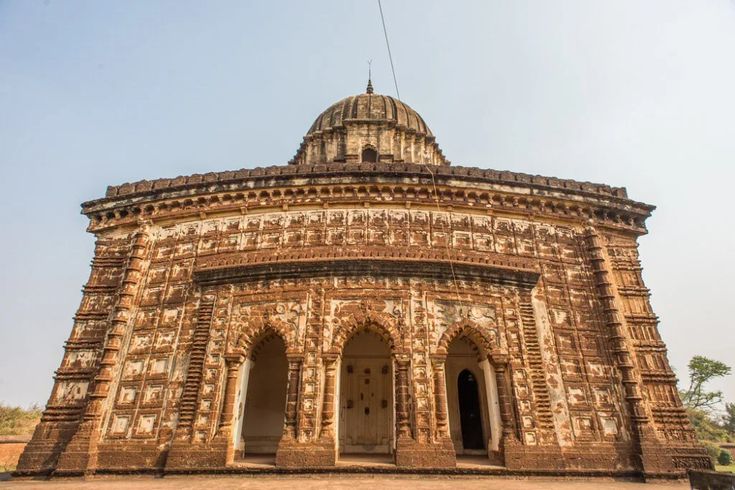
Bishnupur’s significance in Indian history stems from its role as the capital of the prosperous Malla rulers from the 7th to the 18th century. These devout Vaishnavite kings were not only skilled administrators but also great patrons of art, architecture, and culture. Under their rule, Bishnupur flourished as a center of artistic excellence, particularly during the 17th and 18th centuries when most of the iconic terracotta temples were constructed. The Malla kings created a distinctive architectural style that combined religious symbolism with exceptional craftsmanship, using the locally available laterite and terracotta to create structures that have withstood the test of time. Their patronage extended beyond architecture to include classical music, leading to the development of the famous Bishnupur Gharana, and various crafts including the renowned Baluchari saree weaving tradition.
Architectural Marvels
The terracotta temples of Bishnupur represent one of India’s most significant architectural achievements. What makes these structures particularly remarkable is their construction material – the abundant local clay that artisans transformed into breathtaking works of art. The geographical absence of good quality stone in the region led to the innovation of using terracotta as the primary medium, resulting in a unique architectural style that became synonymous with Bengal temple architecture.
The temples can be categorized into several distinct architectural styles. The ratna style features towers or pinnacles, with examples ranging from the single-towered eka-ratna to the multi-towered pancha-ratna. The bangala style resembles traditional thatched huts, while the chala style incorporates sloping roof designs. Each temple tells a story not just through its structure but through the intricate terracotta panels that adorn its walls, depicting scenes from Hindu epics, contemporary social life, floral patterns, and geometric designs.
Must-Visitting Trip Bishnupur Terracotta Wonders
- Rasmancha (1600 CE): The oldest surviving monument in Bishnupur, Rasmancha presents a unique architectural vision. Built by King Bir Hambir, this pyramid-shaped structure features a single tower surrounded by arched galleries. Its original purpose was to host the annual Ras festival, where deities from all other temples would be brought together for public viewing. The architectural style is completely unique to Bishnupur, with no parallel found anywhere else in India.
- Jor Bangla Temple (Kesto Rai Temple): This magnificent temple, built by King Raghunath Singha in 1655 CE, exemplifies the classic jor-bangla (double hut) style. The entire surface is covered with elaborate terracotta panels depicting scenes from the Ramayana, Mahabharata, and Puranas. The attention to detail in the carvings is extraordinary, with each panel telling a complete story through visual narrative.
- Shyam Rai Temple (1643 CE): Considered the most elaborate of Bishnupur’s temples in terms of terracotta artistry, this pancha-ratna (five-pinnacled) temple was built during the reign of King Raghunath Singha. The temple stands on a raised platform and features intricate carvings that cover every available surface. The terracotta work includes detailed depictions of Krishna Leela, hunting scenes, and contemporary social life, providing valuable insights into 17th-century Bengali society.
- Madan Mohan Temple (1694 CE): Built by King Durjan Singha, this temple follows the eka-ratna (single pinnacle) style and stands as one of the most important religious sites in Bishnupur. The temple’s terracotta panels are particularly notable for their narrative quality, depicting various episodes from Krishna’s life with remarkable artistic skill.
- Lalji Temple (1658 CE): Another excellent example of the eka-ratna style, this temple dedicated to Radha-Krishna was commissioned by King Bir Singha. The terracotta panels here show a distinct evolution in style and technique, with more refined carvings and complex compositions.
- Other Significant Sites: The Dalmadal Cannon, a massive iron cannon located near the Gokulchand Temple, represents the town’s military history. According to local legends, this cannon protected the kingdom from invaders. The Bishnupur Museum, managed by the Archaeological Survey of India, houses an excellent collection of local sculptures, terracotta panels, and artifacts that provide deeper insights into the region’s history and culture.
Cultural Heritage: Beyond Architecture
A tour to Bishnupur extends beyond architectural appreciation to encompass its rich living cultural traditions. The Bishnupur Gharana of Hindustani classical music represents one of the most respected musical traditions in India. Developed under the patronage of the Malla kings, this gharana is known for its distinctive vocal style and composition. The tradition continues to thrive today, with several families maintaining this musical legacy.
The town is equally famous for its Baluchari sarees, characterized by intricate designs woven into silk, depicting scenes from Indian mythology and contemporary life. These sarees represent a centuries-old weaving tradition that has been passed down through generations. Visitors can witness the weaving process and purchase authentic Baluchari sarees from local weavers’ cooperatives.
The local cuisine offers another dimension of cultural experience. Bishnupur is particularly known for its sweets, especially Mihidana and Sitabhog, which are local specialties that have gained popularity across Bengal.
Best Time to Visit
The ideal time for a visit to Bishnupur is during the winter months from October to March, when the weather is most pleasant for exploring the outdoor temple complexes. The temperatures range between 10°C and 27°C, creating perfect conditions for walking tours and photography.
The Bishnupur Mela, held in December, presents an excellent opportunity to experience the town’s vibrant cultural traditions. This festival features classical music performances, traditional crafts exhibitions, and local cuisine, providing visitors with a comprehensive cultural experience.
The summer months (April to June) can be extremely hot and humid, with temperatures often exceeding 40°C, making temple exploration challenging. The monsoon season (July to September) brings heavy rainfall, which can disrupt travel plans, though the rain-washed temples present a uniquely beautiful sight.
How to Reach Bishnupur
- By Train: Bishnupur has its own railway station (station code: VSU) that is well-connected to Howrah Junction in Kolkata. Several express and passenger trains operate on this route daily, with journey times ranging from 3 to 4 hours. The train journey offers scenic views of the rural Bengal countryside and is generally the most convenient mode of transport.
- By Flight: The nearest airport is Netaji Subhas Chandra Bose International Airport in Kolkata (CCU), located approximately 150 km from Bishnupur. From the airport, visitors can hire taxis or take buses to Bishnupur. The road journey typically takes 4-5 hours, depending on traffic conditions. Alternatively, visitors can take a train from Howrah station, which is easily accessible from the airport.
- By Road: Bishnupur is well-connected by road to major cities in West Bengal. Regular bus services operate from Kolkata, Durgapur, and other neighboring cities. The roads are generally in good condition, making for a comfortable journey.
- Local Transportation: Within Bishnupur, the most convenient way to visit the temples is by hiring an auto-rickshaw for the day. For larger groups, local cars can be hired. Most temples are located within a compact area, making cycling another enjoyable option for getting around.
Expected Tour Cost (Per Person Per Day)
| Category | Accommodation | Food | Transport & Sightseeing | Entrance Fees | Total (Approx.) |
|---|---|---|---|---|---|
| Budget | ₹800 – ₹1,500 | ₹400 | ₹300 (Auto-rickshaw) | ₹50 | ₹1,550 – ₹2,250 |
| Mid-Range | ₹2,000 – ₹4,000 | ₹800 | ₹1,000 (Hired Car) | ₹100 | ₹3,900 – ₹5,900 |
| Luxury | ₹5,000+ | ₹1,500+ | ₹2,000 (Private Car) | ₹100 | ₹8,600+ |
Accommodation Guide
Bishnupur offers a range of accommodation options to suit different budgets and preferences. Budget hotels and guesthouses (₹800-₹1,500 per night) provide basic amenities and are usually located within convenient distance from the main temple clusters. Mid-range hotels (₹2,000-₹4,000 per night) offer better facilities including air conditioning, attached bathrooms, and sometimes swimming pools. For those seeking a more authentic experience, heritage properties (₹5,000+ per night) provide a unique opportunity to stay in traditionally styled accommodations that reflect the local architectural heritage.
30 FAQs About Bishnupur
1. What is Bishnupur famous for?
Bishnupur is world-renowned for its magnificent terracotta temples built by the Malla rulers between the 17th and 18th centuries.
2. How many days are enough for a visit to Bishnupur?
A two-day trip is sufficient to cover the major temples and the museum at a comfortable pace.
3. Is Bishnupur safe for solo travelers?
Yes, Bishnupur is generally considered a safe and peaceful town for solo travelers.
4. What is the local food one must try in Bishnupur?
Do try the local Bengali cuisine, especially sweets like Mihidana and Sitabhog, which are specialties of the town.
5. Can I buy the famous Baluchari sarees in Bishnupur?
Absolutely. Bishnupur is one of the best places to buy authentic handwoven Baluchari sarees directly from the weavers’ cooperatives.
6. What is the Bishnupur Gharana of music?
It is a distinct and revered school of Hindustani classical music that originated under the patronage of the Malla kings.
7. Are the temples in Bishnupur wheelchair accessible?
Unfortunately, most temples have steps and uneven pathways, making accessibility challenging.
8. Is there an entry fee for the temples?
Most temples are free to enter, but some maintained by the ASI, like the Rasmancha complex, have a small entry fee.
9. What is the best way to travel within Bishnupur?
The best way is to hire an auto-rickshaw or a local car for a full day to cover all the temple sites conveniently.
10. Are there guided tours available?
Yes, local guides are available at the major temple sites, and you can also pre-arrange tours through travel agencies.
11. What is the nearest major city to Bishnupur?
Kolkata is the nearest metropolitan city, approximately 150 km away.
12. Can I combine a trip to Bishnupur with other places?
Yes, it can be combined with a trip to Bankura or the nearby Susunia Hills.
13. What is the history behind the Dalmadal Cannon?
It is a massive cannon built to defend the kingdom and is steeped in local legends.
14. Is photography allowed inside the temples?
Yes, photography is generally allowed, but using a flash or tripod may be restricted.
15. What kind of climate does Bishnupur have?
Bishnupur has a tropical climate with hot summers, a monsoon season, and mild winters.
16. Are there good accommodation options near the temples?
Yes, there are several hotels and guesthouses located within a short distance of the main temple clusters.
17. What is the Rasmancha used for today?
It is a protected historical monument and a major tourist attraction, though no longer used for its original purpose.
18. Is Bishnupur a good destination for history students?
Without a doubt. It is one of the best places for studying medieval Bengali temple architecture and terracotta art.
19. What is the language spoken in Bishnupur?
The primary language is Bengali, but Hindi and English are understood in hotels and tourist areas.
20. Why are the temples made of terracotta?
The Gangetic plains of Bengal lack good quality stone, so artisans used the abundant local clay to create bricks and intricate terracotta plaques.
21. What are the operating hours for the temples?
Most temples are open from sunrise to sunset, though specific timings may vary for ASI-protected monuments.
22. Are there any accommodation options within the temple premises?
No, but there are several hotels and guesthouses located within walking distance of the major temple clusters.
23. What photography equipment is recommended?
A wide-angle lens is ideal for capturing temple architecture, while a macro lens can help photograph the intricate terracotta details.
24. Are there any local festivals besides the Bishnupur Mela?
Yes, the Ras Utsav in autumn is a major religious festival celebrated with great enthusiasm.
25. What other crafts can I purchase in Bishnupur?
Apart from Baluchari sarees, you can find terracotta pottery, conch shell jewelry, and dokra metal crafts.
26. Is there any dress code for visiting the temples?
While there’s no strict dress code, modest clothing that covers shoulders and knees is recommended as a sign of respect.
27. Are there English-speaking guides available?
Yes, certified English-speaking guides can be arranged through the West Bengal Tourism Development Corporation office.
28. What medical facilities are available?
Bishnupur has several hospitals and clinics that can handle basic medical emergencies, though serious cases are usually transferred to Kolkata.
29. Can I visit Bishnupur as a day trip from Kolkata?
While possible, it’s quite rushed. A minimum two-day stay is recommended to properly appreciate all the sites.
30. What banking facilities are available?
Bishnupur has several nationalized banks and ATMs, though it’s advisable to carry sufficient cash as smaller shops may not accept cards.
Comment (0)